
Luis Fernando Arévalo - Consultant
Knowledge Management (KM)
Knowledge management is helping organizations and companies learn from what they do, not just accumulating information.
In many projects and companies, valuable experience is generated that never becomes real learning. It disperses in reports, stays in people and disappears when the project ends or changes the team. My job is to prevent that from happening, combining knowledge management, strategic communication and Design Thinking approaches to understand needs, order learning and turn them into practical solutions.
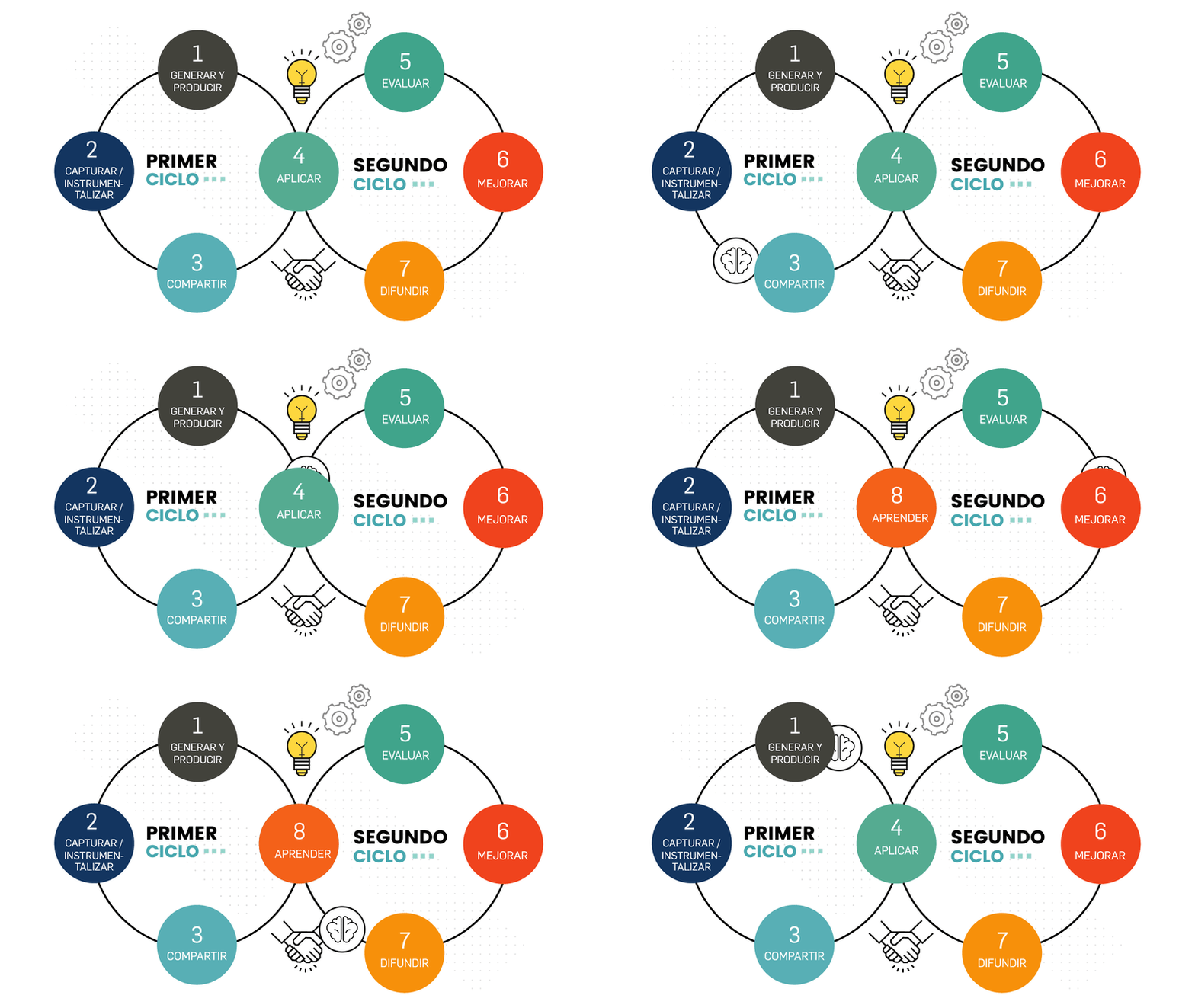
What can I do in your organization or company?
In practice, knowledge management includes processes such as:
-
Document experiences and lessons learned
-
Systematize project results
-
Design and facilitate communities of practice
-
Convert technical information into accessible product.
-
Develop platforms and virtual courses for organizational learning
-
Design learning and knowledge management solutions focused on the real needs of teams and organizations.
Experience in development projects
For more than twenty years I have worked in knowledge management processes in health, nutrition and environment projects, public policies and social development in Guatemala and Latin America.
These processes have included from the systematization of experiences to the design of learning platforms, virtual courses and communication products that allow knowledge sharing between teams and organizations. In these processes I incorporate participatory and Design Thinking tools to identify problems, organize ideas and build more useful solutions for those who are really going to use them.
Why does it matter?
That well-managed knowledge becomes an advantage that remains in the organization, even when the staff changes.
Why work with me?
I have built repositories of more than 1,500 documents and activated communities of practice that continue to work after the project is finished, because I design the processes so that the team can sustain them without depending on me. I combine knowledge management with strategic communication and Design Thinking, so that what your organization or company learns becomes products that people really use, not reports that no one reopens.
If you are interested in more information related to this topic, you can visit my Blog, or if you already know that your organization or company needs to strengthen knowledge management, let's talk.