
Impact of cell phone use on human life: benefits and risks

I recently received a couple of links to some YouTube videos whose theme was the effect of cell phone use on people's lives (How Is Your Phone Changing You? And Your phone is trying to control your life). This led me to investigate and with the help of Perpléxity we have developed this article that I hope is interesting to you too.
Cell phones have become one of the most transformative technologies in modern history, fundamentally revolutionizing the way humans communicate, learn, work and relate. Since the first mobile call made in 1973, this technology has evolved from being a basic communication device to becoming a multifunctional tool that concentrates practically all aspects of daily life. With more than 78% of the world's population owning a mobile phone and a penetration of 65% in the use of mobile internet, it is undeniable that we are facing an unprecedented social phenomenon that deserves an in-depth analysis of both its positive and negative effects on society.
Positive impact of cell phone use
Revolution in Health and Medicine
One of the most significant impacts of cell phones has been in the health sector. Mobile devices have democratized access to health care through telemedicine, allowing millions of people in remote areas to receive medical consultations without having to travel. Mobile health applications have transformed medical monitoring, allowing patients to track their health conditions in real time and facilitate remote medical decision-making.
The World Health Organization has promoted the use of mobile applications to combat diseases such as diabetes, cancer and cardiovascular diseases. In Mexico, the Ministry of Health implemented the "Mobile Health" project as part of the national strategy to prevent overweight, obesity and diabetes. Israeli companies have developed devices that use the smartphone camera to detect cervical cancer, demonstrating how these devices can serve as medical diagnostic tools.
Transformation of Education
In the educational field, cell phones have democratized access to knowledge. 92.4% of internet users use a mobile phone to connect, which has allowed students around the world to access quality educational resources regardless of their geographical location. Mobile devices allow mobile learning (M-Learning), making it easier for students to study anytime and anywhere, adapting their education to their pace of life.
Educational applications have revolutionized the way students acquire knowledge, from language learning apps to scientific simulators. The mobile phone allows interactive and personalized learning, contributing to the development of digital skills essential for the future work. Research shows that 54% of respondents say that the relationship between the use of technology and the increase in motivation among students is high.
Revolution in Communication and Social Relations
Cell phones have radically transformed human communication, eliminating geographical and temporal barriers. Mobile telephony has improved productivity, as people act more efficiently when they are connected, especially since they can be connected at any time, from anywhere and with whomever they want. This constant connectivity has strengthened family and social ties, allowing people to maintain long-distance relationships.
Real-time communication has changed the way we relate, allowing immediate access to information, news and participation in social networks from anywhere. Smartphones have democratized access to information and have facilitated citizen participation in democratic and social change processes.
Impact on Work and Productivity
Mobile phones have revolutionized the world of work, allowing remote work and turning any place into a potential office. This flexibility has improved the balance between work and personal life, especially during the COVID-19 pandemic, when the importance of these tools to maintain work continuity was demonstrated.
Mobile technology has contributed significantly to global economic growth. In Latin America, mobile technologies and services generated 8% of GDP in 2023, a contribution that amounted to USD 520 billion in added economic value. The mobile ecosystem also generated about 2 million direct and indirect jobs in the Latin American region.
The Adverse Impact of Cell Phones on Human Well-Being
Impact on Mental Health
Despite its benefits, the excessive use of cell phones has generated serious mental health problems. "Nomophobia" (irrational fear of being without a mobile phone) has become an increasingly common mental disorder, especially among young people. Studies reveal that 52% of girls and 44% of boys reported frequent or occasional problems with the use of their mobile phone.
Scientific research has established direct correlations between excessive use of mobile phones and problems such as anxiety, depression, chronic stress and low self-esteem. A study revealed that the use of mobile phones for 2 hours a day for social media services and online chats is associated with an increased risk of depression. Physical symptoms of overuse anxiety include "ghost vibration syndrome," which is the imaginary sensation that the cell phone is vibrating.
Consequences on Physical Health
Prolonged cell phone use has resulted in a number of medically documented physical problems. The "text neck" has become a common disorder, derived from the bad posture adopted when constantly using electronic devices. Effects include neck stiffness, shoulder pain, headaches and muscle contractures.
Other physical problems include tendonitis, especially in the thumbs due to repetitive movements, and visual problems such as dry eyes, blurred vision and temporal myopia caused by prolonged exposure to screens. Research has shown that direct LED light emitted by cell phones can damage the retina.
Addiction and Technological Dependence
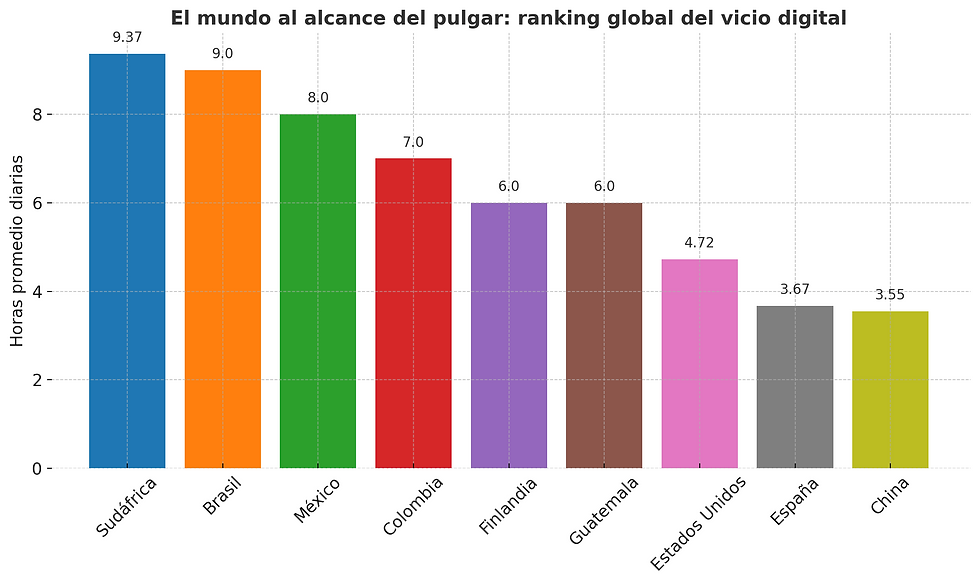
Addiction to mobile devices has become a serious social problem. Spaniards invest an average of 3 hours and 40 minutes every day in mobile use, while in Brazil, users spend more than 9 hours a day. These data reveal levels of use that can be considered problematic.
Addiction is characterized by the inability to control the use of the phone, withdrawal symptoms when the device cannot be accessed, and the use of the mobile as a coping strategy to avoid negative emotional states. Studies show that 62.7% of the sample analyzed failed in their efforts to reduce mobile phone use.
Impact on Academic Performance
The inappropriate use of cell phones in educational environments has shown negative effects on learning. Incorrect use of the cell phone, such as playing or sending messages while doing an academic activity, consumes time and efficiency. Students who spend more time on the smartphone show less motivation to read, a fundamental skill for academic development.
Research indicates that the excessive use of cell phones is associated with an increased risk of attention deficit disorder, memory problems, low school performance, sleep disorders and lower productivity. The constant distraction caused by notifications affects the ability to concentrate and pay attention.
Deterioration of Social Relations
Ironically, although cell phones were designed to improve communication, excessive cell phone use has caused problems in interpersonal relationships. The phenomenon of "phubbing," or ignoring someone in favor of using a phone, has become common. This limits face-to-face interaction and contact with the environment.
27.8% of users prefer mobile phone contact and avoid face-to-face contact with their friends. This behavior has led to a reduction in social skills, especially in children and adolescents, who develop less capacity for empathy and emotional understanding.
Sleep Disturbances
One of the most documented effects of excessive cell phone use is sleep disturbance. The light from these phones suppresses the production of melatonin by up to 22%, a hormone that promotes sleep. This interrupts the circadian cycle and significantly decreases the quality of sleep.
Studies reveal that mobile phone use for more than 5 hours a day is associated with a shorter sleep duration and insomnia. Exposure to screens before bed has become a significant factor in sleep disorders, especially among adolescents.
Global and Regional Usage Statistics
Statistical data reveal the magnitude of the mobile phenomenon worldwide. At the end of 2023, 418 million people in Latin America (65% of the population) used mobile internet. Globally, 78% of the world's population aged ten and over owns a cell phone. https://explodingtopics.com/blog/smartphone-stats.
In brief, the cell phone is one of the most transformative technological innovations in human history, having had profound and dual impacts on society. On the one hand, it has democratized access to information, revolutionized healthcare, transformed education, and improved global connectivity. The benefits are undeniable, ranging from the ability to perform remote medical diagnoses to facilitating personalized learning and maintaining family connections across continents.
However, the reverse of this technological revolution presents serious challenges that cannot be ignored. Addiction to mobile devices, mental health problems such as nomophobia and anxiety, the physical consequences of excessive use, and the deterioration of interpersonal relationships represent significant social costs of our technological dependence.
Statistics reveal that we are at a critical point: with averages of use ranging from 3.7 to 9 hours a day, and with more than 78% of the world's population owning a mobile device, society must urgently address the need for a balanced and conscious use of this technology.
The key to the future does not lie in rejecting this transformative technology, but in developing regulatory frameworks, educational programs and public health strategies that maximize benefits while minimizing risks. It is essential to promote digital literacy, teach healthy habits of technological use, and encourage self-regulation both individually and collectively.
The cell phone, like any powerful tool, is neutral in itself; its impact depends entirely on how we use it. The responsibility lies with society, educators, health professionals and public policy makers to ensure that this technological revolution contributes to human well-being without compromising our physical, mental and social health. Only through a balanced and informed approach can we take full advantage of the transformative potential of mobile devices while protecting what makes us fundamentally human: our relationships, our health and our well-being.
Sources
Facts About Cell Phones and Your Health https://www.cdc.gov/radiation-health/data-research/facts-stats/cell-phones.html
Two edges of the screen https://pmc.ncbi.nlm.nih.gov/articles/PMC10132652/


Comments