
The everyday objects that replaced the cell phone

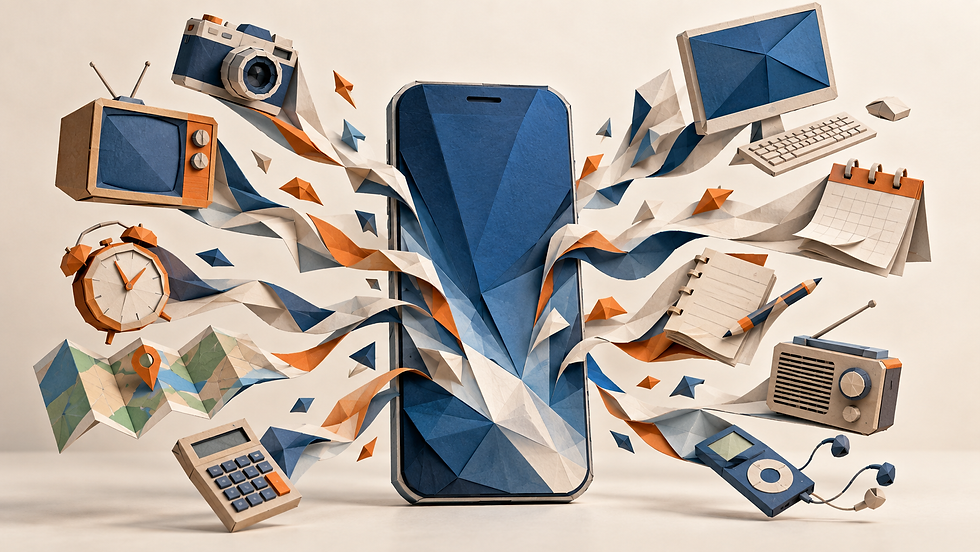
A few years ago, when leaving home, you had to check a few things: the keys, the wallet, the watch and, if necessary, a notebook with addresses. When the plan was a trip, the list grew: the camera so you don't miss any photos and a folded map that would possibly never close again. Today the review is just this: do I take my cell phone with me?
If it's in the pocket, we feel that we carry everything. There are the contacts, the photos, the dates, the documents, the bank, the news, the music, the maps and our social life. The cell phone not only added functions. Little by little it became the first thing we used and now we use it for almost everything.
It didn't completely eliminate the computer, television or camera, but it made us no longer need them for almost anything.
The transition was gradual. We stopped using the alarm clock because the phone could ring at any time and with any melody. The wristwatch stopped being used (or using a watch connected to the cell phone). Paper gave way to digital. The phone book is no longer useful. The calculator, recorder, flashlight and music player became icons within the same screen.
I remember once my dad asked me when a phone had stopped working to talk on the phone. And thinking about it, it's just for what we use it the least today.
Other objects did not disappear, but changed category. The camera stopped being something we all needed and became a specialized tool. The independent GPS stayed for some vehicles or specific jobs. The radio is still there, but it no longer decides what we listen to or at what time. The wallet is losing popularity compared to digital payments.
On a bedside table from twenty years ago there could be a clock, a radio, a book, a lamp, a landline telephone and perhaps a notebook. Today you can only charge a cell phone because it takes up less space and captures more attention.
The camera is a change that catches my attention because it transformed our relationship with memories and society. Before, we only took pictures from time to time. You had to buy a roll, reveal the images and accept that some came out dark or poorly focused. Each photo cost money, so we thought twice before taking it.
Today, taking pictures with a cell phone is very common. We take pictures of the food, take a selfie after each attempt until we find one we like, and document the scenes that we would have otherwise overlooked. We don't just take pictures to remember in the future. We use it to talk, teach, sell, find ourselves, ask for help, or say where we are without writing.
The cell phone camera did not replace any other device. It changed what a photo is used for. It became a common way to communicate.
Something similar happened with the TV, although it still occupies a visible place in the living room. For many years, it was in charge of organizing family activities. There was a program that you had to watch at a certain time. Some people look at the same screen, even if we didn't like what we saw. The next day, though, they had good comments about the program.
The cell phone made the deal impossible. Everyone decides what to see, when to see it, and how long they will spend there. In a room, four people are watching different things. Some are watching YouTube, others are watching TikTok or a reel. The TV is still in the living room, and it's bigger and has a better picture than ever, but it's not the main place for entertainment anymore.
It also changed what we consume. A two-hour movie competes with videos of a few seconds. A complete news story competes with an X headline, a fragment or a reaction. We control the schedule, but the platforms decide what to show us.
With the computer it was different. It did not disappear, but now it is mainly used for complicated lomas: write long documents, design, analyze data, program, edit complex materials, work with several sources at the same time. Many tasks that were previously done on the desk are now done on the phone.
You don't need a computer to do many things. You can use a computer to send emails, buy things, transfer money, buy tickets, fill out forms, participate in meetings, read documents, or publish content. Many people use their phones to access the internet for the first time.
This has consequences that we don't yet understand. We're still making webpages, courses, forms, and reports for a big screen, but people will probably use their phones more to access them. A PDF with small text can be available but useless. Designing for mobile devices is now as important as other types of design. Know where the people are.
It's better to have everything in one place. We carry fewer things, we handle paperwork quickly, and we use services that used to take time, involve waiting in long lines, and require physical travel. If we get lost, the map will help us. We write things down when we need to remember them. In case of an emergency, we can call for help, look for information, or share our location right away.
But this comfort made people dependent on it. When a cell phone's battery runs out, it can lose its signal. The phone can also break, get stolen, or get lost. We lost everything: camera, bank, agenda, contacts, maps, tickets, passwords, and access to activities. It is a small object that has many uses and contains personal information.
Some borders were also removed. The same device we use for work sometimes interrupts us with personal messages or notifications. The screen immediately shows a video, a purchase, or a fight in the comments. The device that helps us organize time also consumes it.
The biggest change is not how many objects replace the cell phone, but the place it occupies in our decisions. We use our phones for many things, like knowing the time, remembering appointments, answering questions, taking photos, distracting ourselves, talking, and finding our way.
We left the cell phone with the things we had mentioned. But it took away the moments of waiting, boredom, silence, and even the possibility of doing nothing. Everything can fit in your pocket. We don't know when to take it out.

Comments